Not every smile transformation needs veneers, crowns or extensive dental treatment. Composite bonding uses tooth-coloured material to make carefully considered changes to the shape and proportions of your teeth, whether that’s repairing a chip, rebuilding worn edges, closing a small gap or bringing more balance to your smile.
At Broad Street Dental Practice in Ely, the emphasis isn’t simply on making teeth look straighter or more uniform. It’s on creating a result that works with the teeth, face and smile you already have.
Load more


The difference between bonding that looks natural and bonding that looks obviously “done” often comes down to the details. Shape, length, symmetry, surface texture and the way the teeth relate to one another all matter. So does choosing a shade that works with the rest of the smile.
That’s why your consultation isn’t simply about deciding how many teeth to bond. We’ll look at what you’re hoping to change, your existing teeth, your bite and how the proposed changes will work as part of your smile as a whole.
Sometimes composite bonding works beautifully on its own. Sometimes the best cosmetic result comes from doing less bonding because we’ve improved the position and colour of the teeth first.
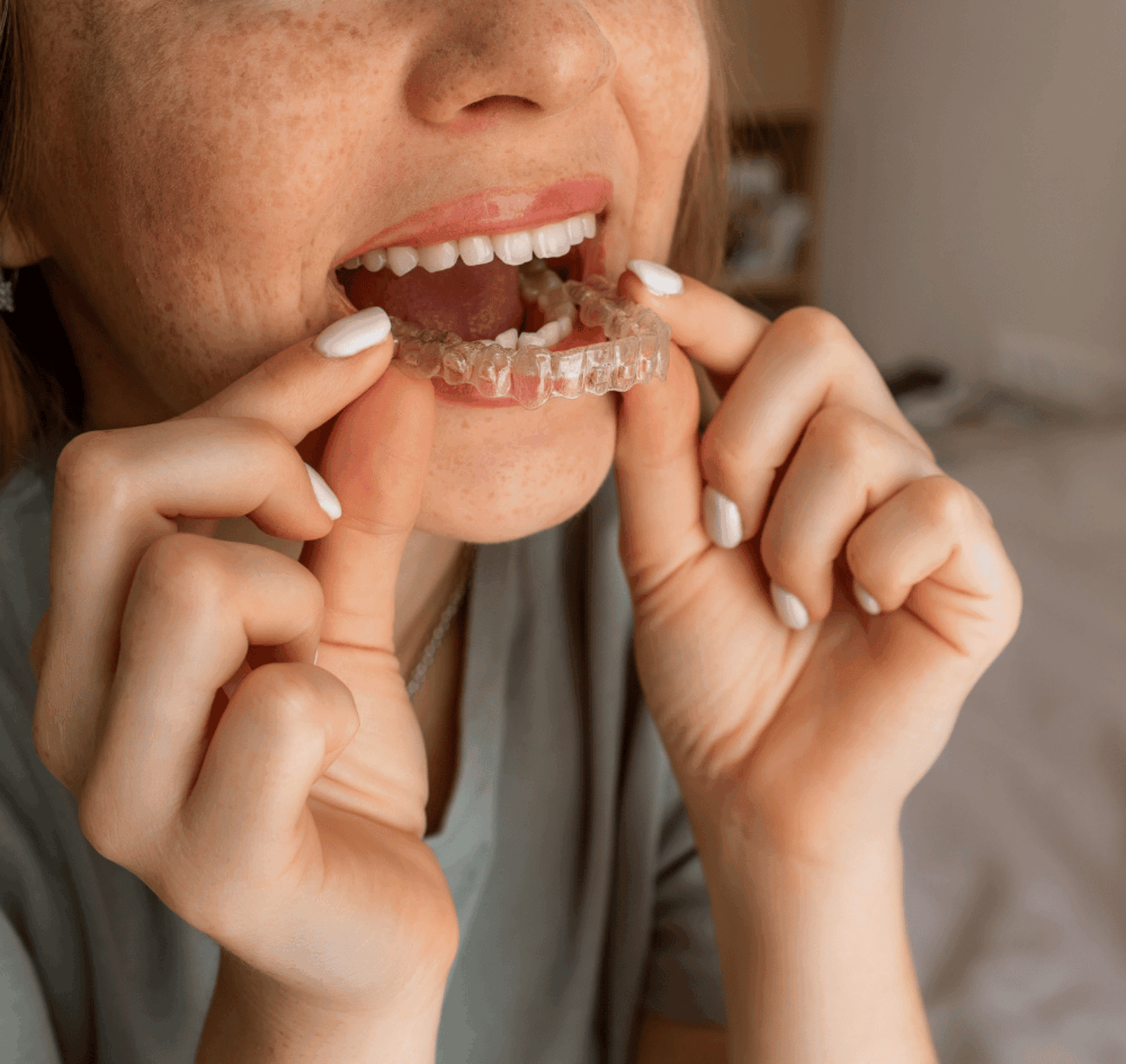
Clear aligners can move teeth into a better position. Professional teeth whitening can establish the lighter shade you’d like to achieve. Composite bonding can then be used selectively to refine shapes, rebuild edges or close small gaps.
If you’re researching cosmetic dentistry, you’ve probably come across both.
Composite bonding is applied directly to the tooth and is generally the more conservative option, often requiring little or no alteration of the underlying enamel. Porcelain veneers are made outside the mouth and can offer different possibilities where more significant changes to the shape, colour or appearance of teeth are required.
Neither is automatically better. It depends on your teeth, the changes you’re trying to make and what you want from the finished result. We’ll explain the advantages and limitations of each rather than recommending more treatment than you need.
This is one treatment where the dentist’s planning and eye for detail can make a considerable difference. Composite isn’t simply manufactured to a standard shape and fitted to the tooth. The material is placed and sculpted directly onto your teeth, so the proportions, contours and finish are created as part of the treatment.
When you’re considering bonding, it’s worth looking beyond price alone. Ask to see examples of the dentist’s own work, consider whether their results suit the kind of smile you’re hoping for and make sure your consultation includes a proper discussion about your teeth, bite and whether bonding is actually the right treatment for you.

Composite bonding is usually a straightforward treatment, but the planning beforehand is just as important as the bonding itself.
One of the main attractions of composite bonding is that it can often be carried out with little or no removal of healthy enamel. Exactly what is required will depend on your teeth and the changes being made.
There isn’t a single lifespan that applies to everyone. Composite will gradually wear and may eventually need polishing, repair or replacement. Your bite, habits and how well you look after your teeth can all influence its longevity.
Yes, small gaps can often be closed by carefully adding composite to change the proportions of the neighbouring teeth.
For larger spaces, or where tooth position is the main issue, clear aligner treatment may be more appropriate.
If you’d like your teeth lighter as well as changing their shape, whitening will usually be considered before the final shade of composite is selected. This is because composite doesn’t whiten in the same way as natural enamel.
Bonding can disguise some minor irregularities, but it doesn’t physically move the teeth. If tooth position is the main concern, clear aligners may be more appropriate, potentially followed by selective bonding to refine the final shapes.
They’re different treatments. Bonding is generally more conservative, while porcelain veneers may be more appropriate where greater changes are required. We’ll assess your teeth and explain which approach is best suited to the result you’re trying to achieve.

Claire


Ann CQ
Dilara E.
Corn P.
Adam P.
John B.
Tracie P.
Les R.
Charlie E.
Simon G.
Erika K.
Alex M.
Laura S.
Irine J.
Indre S.
Claire
Ann CQ
Dilara E.
Corn P.
Adam P.
John B.
Tracie P.
Les R.
Charlie E.
Simon G.
Erika K.
Alex M.
Laura S.
Irine J.
Indre S.
Claire
Ann CQ
Dilara E.
Corn P.
Adam P.
John B.
Tracie P.
Les R.
Charlie E.
Simon G.
Erika K.
Alex M.
Laura S.
Irine J.
Indre S.


Get personalised advice from our skilled team and take the first step towards a healthier, more confident smile.
Book a consultation




We believe great dentistry is about more than healthy teeth. It's about creating positive experiences and building lasting relationships.
Book online